
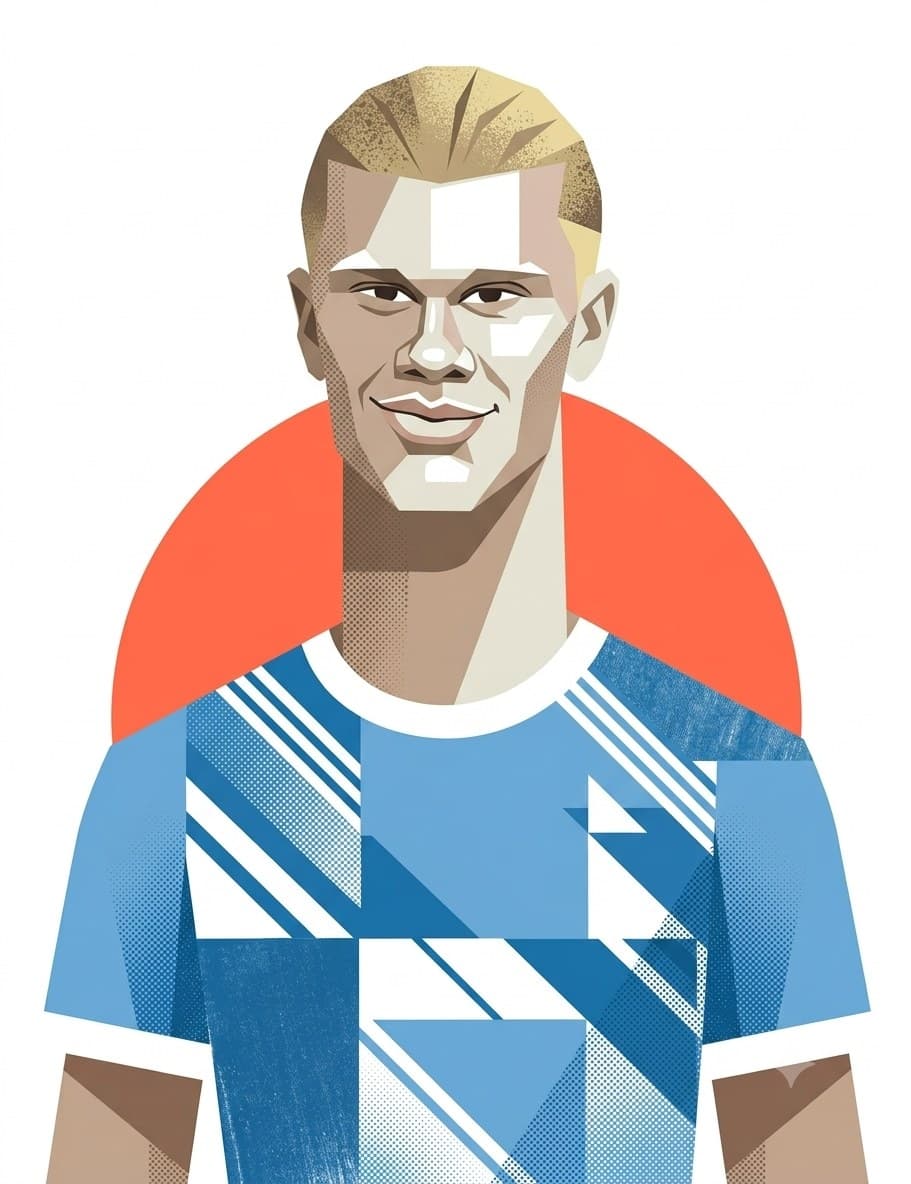
Amigos, la temporada ha dado oficialmente el banderazo inicial.
Las torres del Fantasy abrieron sus puertas a la temporada 2026-27 el jueves y muchos de nosotros ya corrimos a armar nuestros primeros equipos, además de asegurar un ID que no sea demasiado difícil de memorizar.
Con esa primera plantilla guardada en la aplicación, comienzan las preguntas. Empieza el acomodo de los nombres, los precios y las figuras.
Y eso me lleva a una reflexión que normalmente hago al inicio de cada temporada: ¿quién es el primer jugador que entra a tu equipo cuando la plantilla está completamente en blanco?
Para quienes han seguido a Bendito Fantasy durante mucho tiempo, esta no es una pregunta nueva. Se la hemos hecho a varios campeones después de terminar la temporada y las respuestas han sido bastante variadas. Es entendible: cada entrenador tiene una estrategia ligeramente distinta.
Pero existe una respuesta que se repite más que las demás.
Un jugador premium.
Durante muchos años, el FPL tuvo a ese jugador místico, casi un unicornio, capaz de ocupar la categoría que conocemos como premium. No era solamente un futbolista caro para nuestra plantilla. Era el jugador alrededor del cual construíamos el equipo.
La piedra angular.
Se me vienen a la mente nombres icónicos como Thierry Henry, Cristiano Ronaldo, Frank Lampard, Sergio Agüero, Alexis Sánchez, Harry Kane, Kevin De Bruyne y, más recientemente, Mohamed Salah.
Jugadores que no necesitaban justificar su precio cada dos o tres jornadas, porque su producción, centralidad y continuidad convertían su ausencia en un riesgo absoluto para nuestros equipos.
Sin embargo, hoy esa categoría parece estar quedándose prácticamente vacía.
¿Qué es realmente un premium?
La primera tentación sería definir a un premium por su precio. Pero ser caro no es suficiente.
Desde mi punto de vista, un premium es ese jugador que funciona como talismán de su equipo. Es el que lleva las riendas, el que ejerce como líder y el que ocupa una posición central dentro de todo lo que hace su club.
Normalmente tiene los minutos garantizados, por lo que no nos mantiene con el pendiente constante de saber si va a jugar o no. En términos de Fantasy, además, acumula varios caminos hacia los puntos: goles, asistencias, bonus, penales o incluso, dependiendo de la posición, una gran capacidad para mantener la portería en cero.
Son futbolistas capaces de sostener un precio elevado durante toda la temporada o, al menos, durante largos tramos de ella.
Pero su característica más importante es otra: nos obligan a tomar una decisión estructural.
¿Vamos a tenerlos?
¿O vamos a aceptar el riesgo de no contar con ellos, sufrir las consecuencias cuando otros les entreguen la capitanía y comenzar a quedarnos atrás desde muy temprano?
Hay futbolistas caros que pueden ser intercambiables. Entran y salen de nuestras plantillas con relativa facilidad dependiendo del calendario o de su estado de forma.
Con un verdadero premium, ese movimiento puede resultar mucho más costoso.
Un verdadero premium condiciona toda tu plantilla.
La desaparición del premium
Podríamos regresar a la función que tuvieron Alexis Sánchez, Thierry Henry, Kevin De Bruyne o Mohamed Salah y demostraríamos que antes existía una categoría muy reconocible.
Futbolistas que combinaban talento, volumen, regularidad y dominio dentro de sus equipos.
Ahora parece que ese perfil está desapareciendo.
Y no es que la Premier League se haya quedado sin jugadores de gran calidad técnica. El problema es que esos futbolistas ya no ofrecen las mismas certezas dentro del FPL.
Bukayo Saka, por ejemplo, puede producir como jugador premium, pero sus lesiones han interrumpido constantemente su continuidad.
Cole Palmer demostró durante sus primeras temporadas con Chelsea que posee un techo extraordinario. También ha sufrido físicamente y todavía necesita confirmar que podemos mantenerlo durante varias temporadas en ese escalón.
Phil Foden, cuando está en su mejor momento, no le pide nada a nadie. Sin embargo, su función dentro del equipo ha dependido demasiado del entrenador, del sistema y, en muchos momentos, de la rotación. Ahora, con la llegada de Enzo Maresca al Manchester City, habrá que descubrir qué papel ocupará en el nuevo proyecto y si finalmente recibirá ese rol protagonista que su talento parece exigir.
Otro de los pocos jugadores que recientemente ha alcanzado ese nivel es Bruno Fernandes.
El portugués tuvo una temporada espectacular en 2025-26. Pero Bruno también es uno de esos futbolistas capaces de entregarte una campaña dominante y después una decepcionante, sin que necesariamente cambie su calidad individual.
Cambia el equipo.
Cambian los futbolistas que lo rodean.
Cambia su posición dentro de la cancha.
Cambian los entrenadores.
Michael Carrick puede representar la solución. Lo demostró durante el cierre de la temporada pasada y ofrece esperanza para la que comienza. El propio Fantasy reconoció ese potencial al colocar a Bruno en £12.0m, un precio que lo instala directamente entre los jugadores más costosos del juego.
El problema no es saber si Bruno Fernandes es un gran jugador. El problema es saber qué versión de Bruno Fernandes estamos comprando.
Un premium, por definición, debería reducir esa incertidumbre.
No aumentarla.
Los aspirantes
En una conversación de WhatsApp entre los integrantes de Bendito Fantasy, nuestro analista en jefe, el Profe, identificó a varios jugadores llamados a formar esa nueva camada de futbolistas premium.
Ya he mencionado a algunos, como Saka en £9.5m, Palmer en £9.5m y Foden en £7.0m. Pero también aparecieron nombres como Cherki en £7.5m, Wirtz en £7.5m, Gibbs-White en £8.0m, Isak en £9.0m, Watkins en £8.0m y João Pedro en £7.5m.
Desde el punto de vista técnico, todos tienen la calidad y el potencial para convertirse en los siguientes premiums. Pero alcanzar ese nivel exige mucho más que destellos de brillantez o temporadas fuertes de manera aislada. Para entrar en la lista de los grandes de los que estamos hablando necesitan demostrar consistencia con el tiempo y confirmar que su producción no es circunstancial, sino estructural dentro de sus equipos.
El propio FPL nos ofrece una pista con los precios que les ha asignado: por ahora, todavía no los considera premiums consolidados. Para dar ese salto tendrán que mantenerse sanos, ser utilizados correctamente por sus entrenadores y, en algunos casos, esperar a que sus clubes evolucionen hacia versiones más competitivas sin perder su lugar por la rotación.
Al final, tendrán que convertirse en piezas indispensables, asumir la responsabilidad ofensiva que esperamos de los futbolistas de esta categoría y transformar todo ese potencial en producción sostenida durante una temporada completa. Hasta que eso suceda, seguirán siendo aspirantes y ninguno entra en esta campaña con la autoridad histórica que tenían Salah, Kane o De Bruyne durante sus mejores años.
No faltan jugadores caros. Faltan jugadores inevitables.
Y entonces llega el androide
El futbolista que rompe récords por donde pasa.
Esta vez rompió el mercado.
Erling Haaland comienza la temporada con un precio de £15.5m, el más alto en la historia del Fantasy Premier League.
Pagar esa cantidad por un delantero puede parecer excesivo. Pero estamos hablando del mejor delantero de la Premier League y del último jugador que todavía parece reunir las características tradicionales de un premium.
También sabemos que las torres del FPL no colocan estos precios en el vacío. Intentan administrar la propiedad de los jugadores, mantener la dificultad del juego y controlar la distribución del presupuesto.
Con la salida de Salah y sin otro premium completamente consolidado, mantener a Haaland en un precio más accesible, como los £14.0m con los que comenzó la temporada pasada, probablemente habría facilitado demasiado su incorporación.
El juego habría corrido el riesgo de comenzar con una plantilla prácticamente obligatoria: Haaland como inamovible y, alrededor de él, una colección de mediocampistas de precio medio.
En cierta forma, el Fantasy no está cobrando únicamente por Haaland.
Está cobrando por la ausencia de otro Haaland.
Y aun así, los primeros borradores ya están apareciendo y muchos lo tienen dentro de sus equipos.
Al momento de escribir este artículo, Haaland es, con enorme diferencia, el jugador más seleccionado de todo el Fantasy, con una propiedad del 72.9%.
Ni siquiera un precio de £15.5m pudo evitar que el último gigante fuera también el primero en entrar en nuestros equipos.
¿Y tú?
¿Ya lo incluiste?
¿O intentarás remar contracorriente?
Espantapájaros
Esta será oficialmente la novena temporada de Bendito Fantasy y esperamos que sea la más grande de todas.
Como cada año, nuestra miniliga sigue creciendo y queremos que formes parte de ella. Invita a tus amigos, compite con la comunidad y demuestra quién es el mejor jugador de FPL de habla hispana.
Código de la miniliga: 01s4ww
Friends, the season has officially begun.
The Fantasy Towers opened their doors to the 2026–27 season on Thursday, and many of us immediately rushed to build our first drafts and secure an ID that would not be too difficult to remember.
With that first squad now saved in the app, the questions begin. The names, prices and star players start moving into place.
And that leads me to a reflection I usually have at the beginning of every season: who is the first player you add when your squad is completely blank?
Those who have followed Bendito Fantasy for a long time know this is not a new question. We have asked it to several champions after the season ends, and the answers have varied considerably. That makes sense. Every manager follows a slightly different strategy.
But one answer comes up more often than the others.
A premium player.
For many years, FPL had that mystical player, almost a unicorn, capable of occupying the category we know as premium. It was not simply that he was expensive. He was the player around whom we built the entire team.
The cornerstone.
Iconic names immediately come to mind: Thierry Henry, Cristiano Ronaldo, Frank Lampard, Sergio Agüero, Alexis Sánchez, Harry Kane, Kevin De Bruyne and, most recently, Mohamed Salah.
These were players who did not need to justify their price every two or three gameweeks. Their production, centrality and consistency made going without them an enormous risk.
Today, however, that category appears to be almost empty.
What Is a Premium Player, Really?
The first temptation would be to define a premium by price alone.
But being expensive is not enough.
From my point of view, a premium is the talisman of his team. He pulls the strings, carries leadership and sits at the centre of everything his club does.
He usually has guaranteed minutes, which means we are not constantly worried about whether or not he will start. In Fantasy terms, he also has several routes to points: goals, assists, bonus points, penalties or, depending on the position, a strong chance of keeping clean sheets.
These are players capable of holding a high price throughout an entire season, or at least for long stretches of it.
But their most important characteristic is something else.
They force us to make a structural decision.
Are we going to own them?
Or are we going to accept the risk of going without, suffer the consequences when other managers hand them the captaincy and watch ourselves fall behind from the very beginning?
There are expensive players who are interchangeable. They move in and out of our squads relatively easily depending on fixtures or form.
With a true premium, that move can be far more costly.
A true premium shapes your entire squad.
The Disappearance of the Premium
We could look back at the roles played by Alexis Sánchez, Thierry Henry, Kevin De Bruyne or Mohamed Salah and clearly demonstrate that this was once a very recognisable category.
Players who combined talent, volume, consistency and dominance within their teams.
Now, that profile seems to be disappearing.
It is not that the Premier League has run out of technically gifted players. The problem is that those players no longer provide the same level of certainty in FPL.
Bukayo Saka, for example, can produce like a premium player, but injuries have repeatedly interrupted his continuity.
Cole Palmer showed during his first seasons at Chelsea that he possesses an extraordinary ceiling. He has also struggled physically, which means he has yet to confirm that we can keep him in that premium tier across several seasons.
Phil Foden, at his best, takes a back seat to no one. Yet his role within the team has depended too heavily on the manager, the system and, on many occasions, rotation.
Now, with Enzo Maresca arriving at Manchester City, we will have to see what role Foden is given in the new project. He has just signed a contract extension, and the expectation should be that he receives the leading role his talent demands.
One of the most recent players to reach premium level is Bruno Fernandes.
The Portuguese midfielder delivered a spectacular 2025–26 season. But Bruno is also one of those players who can give you a dominant campaign followed by a disappointing one, without his individual quality necessarily changing.
The team changes.
The players around him change.
His position on the pitch changes.
The managers change.
Michael Carrick may be the solution. He showed signs of that during the closing stages of last season and offers hope for the campaign ahead. Fantasy itself recognised that potential by pricing Bruno at £12.0m, placing him directly among the most expensive players in the game.
The problem is not knowing whether Bruno Fernandes is a great player. The problem is knowing which version of Bruno Fernandes we are buying.
A premium, by definition, should reduce uncertainty.
Not increase it.
The Contenders
During a WhatsApp conversation between the members of Bendito Fantasy, our chief analyst, El Profe, identified several players who could form the next generation of premium assets.
I have already mentioned some of them: Saka at £9.5m, Palmer at £9.5m and Foden at £7.0m.
But the list also included Cherki at £7.5m, Wirtz at £7.5m, Gibbs-White at £8.0m, Isak at £9.0m, Watkins at £8.0m and João Pedro at £7.5m.
From a technical standpoint, every one of them has the quality and potential to become the next premium player, but reaching that level requires far more than flashes of brilliance or isolated strong seasons. To join the great names we have been discussing, they must demonstrate consistency over time, proving that their output is not circumstantial but structural to their teams.
FPL itself is already giving us a clue through the prices it has assigned them, signalling that, for now, it does not consider them established premiums. To make that leap, they will need to stay healthy, be trusted and used correctly by their managers, and, in some cases, wait for their clubs to evolve into more competitive sides without losing their place through rotation.
Ultimately, they must become indispensable figures within their teams, assume the attacking responsibility we expect from players in this category, and translate all that potential into sustained production across an entire season. Until that happens, they remain contenders rather than certainties, and none of them enters the campaign with the historical authority that players like Salah, Kane or De Bruyne commanded at their peak.
There is no shortage of expensive players. What is missing are unavoidable players.
And Then the Android Arrives
The player who breaks records wherever he goes.
This time, he broke the market.
Erling Haaland begins the season priced at £15.5m, the highest price ever assigned to a player in Fantasy Premier League history.
Paying that much for a forward sounds excessive. But we are talking about the best striker in the Premier League and the final player who still appears to possess the traditional characteristics of a premium.
We also know the Fantasy Towers do not set these prices in a vacuum. They are trying to manage player ownership, preserve the difficulty of the game and control how managers distribute their budgets.
With Salah gone and no other fully established premium available, keeping Haaland at a more accessible price, such as the £14.0m he started at last season, would probably have made him too easy to own.
The game would have risked beginning with an almost mandatory squad structure: Haaland as the immovable centrepiece, surrounded by a collection of mid-priced midfielders.
In a sense, Fantasy is not charging us only for Haaland.
It is charging us for the absence of another Haaland.
And even so, the first drafts are already appearing and many managers have included him.
At the time of writing, Haaland is, by a considerable margin, the most-owned player in the entire game, with 72.9% ownership.
Not even a £15.5m price tag could prevent the last giant from becoming the first player in our squads.
What about you?
Have you already included him?
Or are you going to try to swim against the tide?
Final Whistle
This will officially be Bendito Fantasy’s ninth season, and we hope it will be the biggest one yet.
As it does every year, our mini-league continues to grow, and we want you to be part of it. Invite your friends, compete with the community and prove who is the best Spanish-speaking FPL manager.
Mini-league code: 01s4ww